
This section describes how to take an element from the largest heap, called shift down, and only take out the element with the highest priority, that is, the root node. After taking out the original 62, here is how to fill the largest heap.
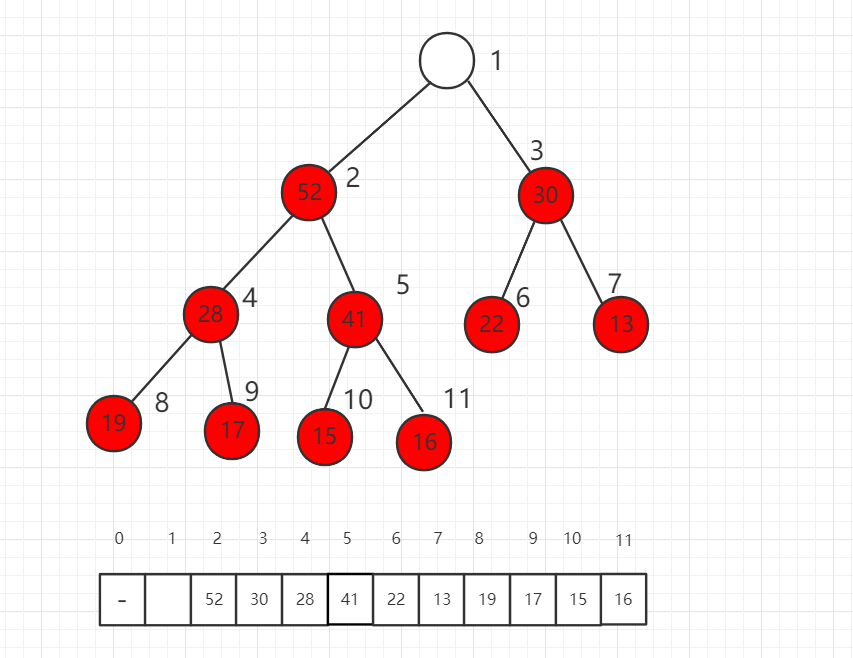
In the first step, we put the last bit of the array to the root node, which does not satisfy the definition of the maximum heap.
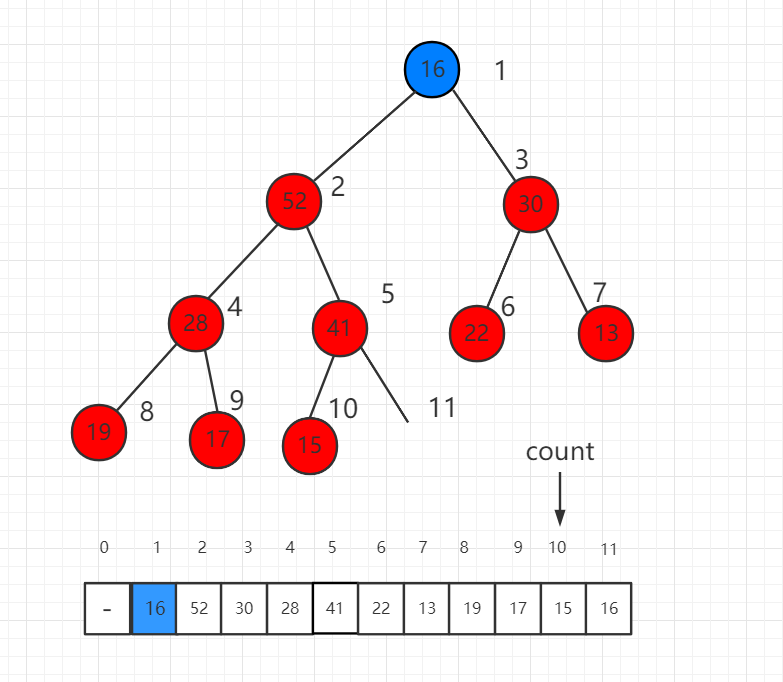
The adjustment process is to move the root node 16 down step by step, 16 is smaller than the child node, first compare which child node 52 and 30 is larger, and the large exchange position.
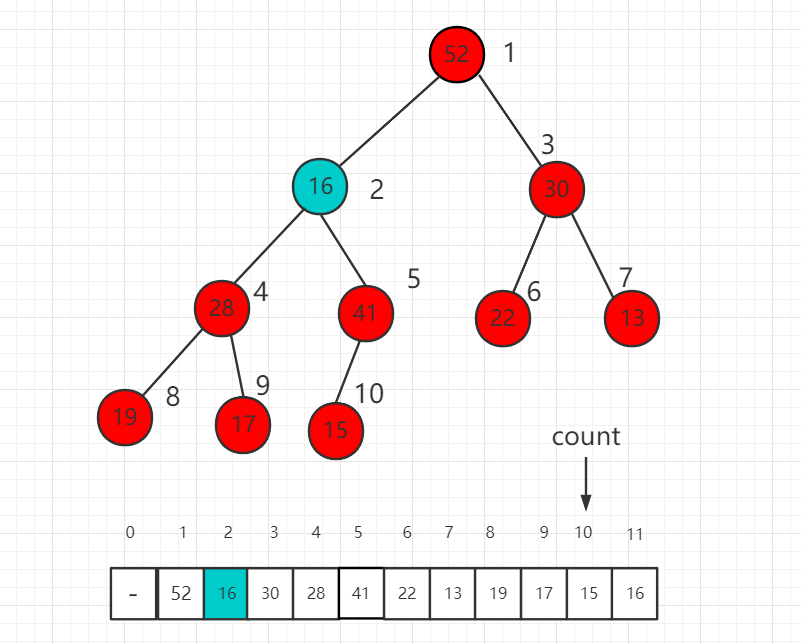
Continue to compare the child nodes 28 and 41 of 16, so 16 and 41 swap positions.
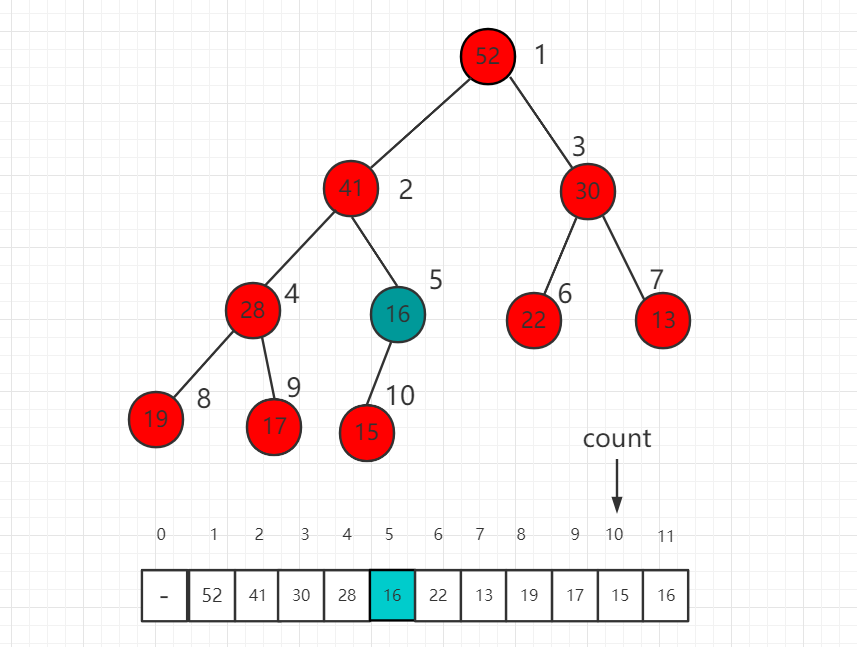
Continue to compare 16 with child node 15, 16, so there is no need to swap now, and finally our shift down operation is completed, maintaining a maximum heap property. 源码包下载: Download
In recent years, Geographic Information Systems (GIS) have undergone rapid development in both theoretical and practical dimensions. GIS has been widely applied for modeling and decision-making support across various fields such as urban management, regional planning, and environmental remediation, establishing geographic information as a vital component of the information era. The introduction of the “Digital Earth” concept has further accelerated the advancement of GIS, which serves as its technical foundation. Concurrently, scholars have been dedicated to theoretical research in areas like spatial cognition, spatial data uncertainty, and the formalization of spatial relationships. This reflects the dual nature of GIS as both an applied technology and an academic discipline, with the two aspects forming a mutually reinforcing cycle of progress. 5.11.1. 4. Java instance code 
Src/runoob/heap/HeapShiftDown.java file code: 
package runoob.heap;
/*\*
\* 往最大堆中取出一个元素
*/
public class HeapShiftDown
Principles, Technologies, and Methods of Geographic Information Systems
102