最近几年来,地理信息系统无论是在理论上还是应用上都处在一个飞速发展的阶段。 GIS被应用于多个领域的建模和决策支持,如城市管理、区划、环境整治等等,地理信息成为信息时代重要的组成部分之一; “数字地球”概念的提出,更进一步推动了作为其技术支撑的GIS的发展。 与此同时,一些学者致力于相关的理论研究,如空间感知、空间数据误差、空间关系的形式化等等。 这恰好说明了地理信息系统作为应用技术和学科的两个方面,并且这两个方面构成了相互促进的发展过程。
HTTP is a “stateless” protocol, which means that every time a client retrieves a web page, the client opens a separate connection to the Web server, and the server automatically does not retain any records previously requested by the client.
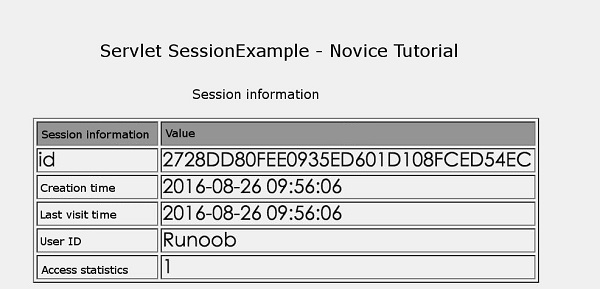
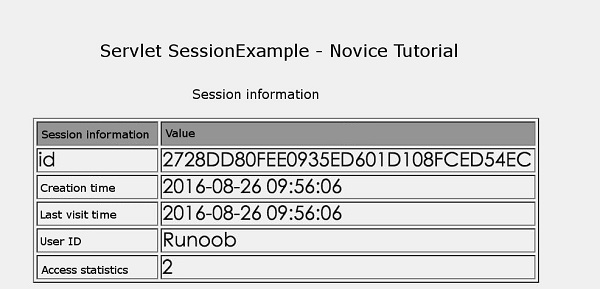
However, there are still three ways to maintain a session session between a Web client and a Web server: A Web server can send a hidden HTML form field, as well as a unique This entry means that when the form is submitted, the specified name and value are automatically included in the GET or POST data. Every time a Web browser sends back a request This may be a way to maintain You can append some additional data to the end of each URL to identify the session session, and the server associates the session session identifier with the stored data about the session session. For example, http://w3cschool.cc/file.htm;sessionid=12345 , session session identifiers are appended as URL rewriting is a better maintenance In addition to the three ways mentioned above, Servlet also provides The Servlet container uses this interface to create a HTTP client and HTTP server You will call the You need to call before sending any document content to the client Serial number Method & description 1 Public Object getAttribute (String name) this method returns an object with the specified name in the session session, or null if there is no object with the specified name. 2 Public Enumeration getAttributeNames () this method returns an enumeration of the String object, which contains the names of all objects bound to the session session. 3 Public long getCreationTime () this method returns the time the session session was created, in milliseconds, from midnight on January 1, 1970 GMT. 4 Public String getId () this method returns a string containing the unique identifier assigned to the session session. 5 Public long getLastAccessedTime () this method returns the last time the client sent a request related to the session session from midnight on January 1, 1970 GMT, in milliseconds. 6 Public int getMaxInactiveInterval () this method returns the maximum interval in seconds that the Servlet container keeps the session session open during client access. 7 Public void invalidate () this method indicates that the session session is invalid and unbinds any objects on it. 8 Public boolean isNew () this method returns true if the client does not already know about the session session, or if the customer chooses not to join the session session. 9 Public void removeAttribute (String name) this method removes an object with the specified name from the session session. 10 Public void setAttribute (String name, Object value) this method binds an object to the session session with the specified name. 11 Public void setMaxInactiveInterval (int interval) this method specifies the time in seconds between client requests before the Servlet container indicates that the session session is invalid. This example shows how to use the Compile the Servlet above Enter http://localhost:8080/TomcatTest/SessionTrack in the browser address bar, and the following results will be displayed when you run it for the first time: Try running the same Servlet again, and it will display the following result: When you have completed a user’s Remove a specific property: you can call the Delete the entire Set up Log out of users: if you are using a server that supports servlet 2.4, you can call logout to log out the client of the Web server and set all the The timeout in the above example is in minutes, which overrides the default timeout of 30 minutes in Tomcat. In a Servlet 2.13.2. Hidden form fields 
session session ID, as follows:<input type="hidden" name="sessionid" value="12345">
session_id values can be used to keep track of different Web browsers. session session tracking is an effective way, but clicking on a regular hypertext link (< A HREF… >) does not result in a form submission, so hidden form fields do not support regular session session tracking. 2.13.3. URL rewriting 
sessionid=12345 the identifier can be accessed by the Web server to identify the client. session session mode, which workswell when the browser does not support cookie, but its disadvantage is thateach URL is dynamically generated to assign a session session ID, evenin a very simple static HTML page. 2.13.4. HttpSession object 
HttpSession interface, which provides a way to identify users and store information about users when requesting or visiting a Web site across multiple pages. session conversation. The session lasts for a specified period of time and spans multiple connections or page requests. HttpServletRequest the public method of getSession() to get HttpSession object, as follows:HttpSession session = request.getSession();
request.getSession() . The following is a summary HttpSession thereare several important methods available in the 2.13.5. Session trace instance 
HttpSession object acquisition session session creation time and last access time. If it doesn’t exist,``session`` session, we will create a new session conversation.package com.runoob.test; import java.io.IOException; import java.io.PrintWriter; import java.text.SimpleDateFormat; import java.util.Date; import javax.servlet.ServletException; import javax.servlet.annotation.WebServlet; import javax.servlet.http.HttpServlet; import javax.servlet.http.HttpServletRequest; import javax.servlet.http.HttpServletResponse; import javax.servlet.http.HttpSession; /** * Servlet implementation class SessionTrack */ @WebServlet("/SessionTrack") public class SessionTrack extends HttpServlet { private static final long serialVersionUID = 1L; public void doGet(HttpServletRequest request, HttpServletResponse response) throws ServletException, IOException { // If there is no session session, create a session object HttpSession session = request.getSession(true); // Get session creation time Date createTime = new Date(session.getCreationTime()); // Get the last visit time of the webpage Date lastAccessTime = new Date(session.getLastAccessedTime()); //Format date output SimpleDateFormat df=new SimpleDateFormat("yyyy-MM-dd HH:mm:ss"); String title = "Servlet Session Example - Rookie Tutorial"; Integer visitCount = new Integer(0); String visitCountKey = new String("visitCount"); String userIDKey = new String("userID"); String userID = new String("Runoob"); if(session.getAttribute(visitCountKey) == null) { session.setAttribute(visitCountKey, new Integer(0)); } // Check if there are new visitors on the webpage if (session.isNew()){ title = "Servlet Session Example - Rookie Tutorial"; session.setAttribute(userIDKey, userID); } else { visitCount = (Integer)session.getAttribute(visitCountKey); visitCount = visitCount + 1; userID = (String)session.getAttribute(userIDKey); } session.setAttribute(visitCountKey, visitCount); // Set response content type response.setContentType("text/html;charset=UTF-8"); PrintWriter out = response.getWriter(); String docType = "\n"; out.println(docType + "\n" + "
\"center\">" + title + "\n" + "
\"center\">Session information\n" + "
\"1\" align=\"center\">\n" + "
\"#949494\">\n" + " Session information value\n" + " \n" + " id\n" + " " + session.getId() + "\n" + " \n" + " Creation time\n" + " " + df.format(createTime) + " \n" + " \n" + " Last Accessed Times\n" + " " + df.format(lastAccessTime) + " \n" + " \n" + " user ID\n" + " " + userID + " \n" + " \n" + " Access statistics:\n" + " " + visitCount + "\n" + "\n" + ""); } } SessionTrack and in the web.xml create the appropriate entry in the file.
2.13.6. Delete Session session data 
session for session data, you have thefollowing options:
public void removeAttribute(String name) method to delete the value associated with a specific key. session session: you can call public void invalidate() method to discard the whole session conversation. session session expiration time: you can call public void setMaxInactiveInterval(int interval) method to set the session the session timed out. session the session is set to invalid. web.xml configuration: if you are using Tomcat, in addition to the abovemethods, you can also use the web.xml configuration in Fil session the session timed out, as follows: <session-config> <session-timeout>15session-timeout> session-config>
getMaxInactiveInterval() method returns the timeout, in seconds, for the session session. So, if you are in web.xml if the session session timeout is configured as 15 minutes in the getMaxInactiveInterval() will return 900.