最近几年来,地理信息系统无论是在理论上还是应用上都处在一个飞速发展的阶段。 GIS被应用于多个领域的建模和决策支持,如城市管理、区划、环境整治等等,地理信息成为信息时代重要的组成部分之一; “数字地球”概念的提出,更进一步推动了作为其技术支撑的GIS的发展。 与此同时,一些学者致力于相关的理论研究,如空间感知、空间数据误差、空间关系的形式化等等。 这恰好说明了地理信息系统作为应用技术和学科的两个方面,并且这两个方面构成了相互促进的发展过程。
It is generally used to switch between subtasks, views, or models in the same view.
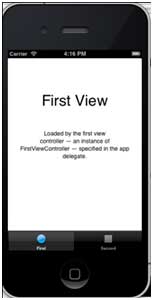
An example of the tab bar is as follows:

Important attribute
BackgroundImage
Items
SelectedItem
Sample code and steps
1. 创建一个新的项目,选择 Tabbed Application 替代视图应用程序 ,点击下一步, 输入项目名称和选择 create .
Here two view controllers and tab bars are created by default to add to our application.
AppDelegate.m didFinishLaunchingWithOptions The methods are as follows:
- (BOOL)application:(UIApplication *)application didFinishLaunchingWithOptions:(NSDictionary *)launchOptions { self.window = [[UIWindow alloc] initWithFrame:[[UIScreen mainScreen] bounds]]; // Override point for customization after application launch. UIViewController *viewController1 = [[FirstViewController alloc] initWithNibName:@"FirstViewController" bundle:nil]; UIViewController *viewController2 = [[SecondViewController alloc] initWithNibName:@"SecondViewController" bundle:nil]; self.tabBarController = [[UITabBarController alloc] init]; self.tabBarController.viewControllers = @[viewController1, viewController2]; self.window.rootViewController = self.tabBarController; [self.window makeKeyAndVisible]; return YES; } Two view controllers are used to assign view controllers as tab bar controllers
Run the application and get the following results: