最近几年来,地理信息系统无论是在理论上还是应用上都处在一个飞速发展的阶段。 GIS被应用于多个领域的建模和决策支持,如城市管理、区划、环境整治等等,地理信息成为信息时代重要的组成部分之一; “数字地球”概念的提出,更进一步推动了作为其技术支撑的GIS的发展。 与此同时,一些学者致力于相关的理论研究,如空间感知、空间数据误差、空间关系的形式化等等。 这恰好说明了地理信息系统作为应用技术和学科的两个方面,并且这两个方面构成了相互促进的发展过程。
Open the PostgreSQL website https://www.postgresql.org/ and click on the menu bar Download You can see that there are installation packages for many platforms, including Linux, Windows, Mac OS, and so on.
For Linux, we can see that various platforms such as Ubuntu and Red Hat are supported. Click the specific platform link to view the installation method:
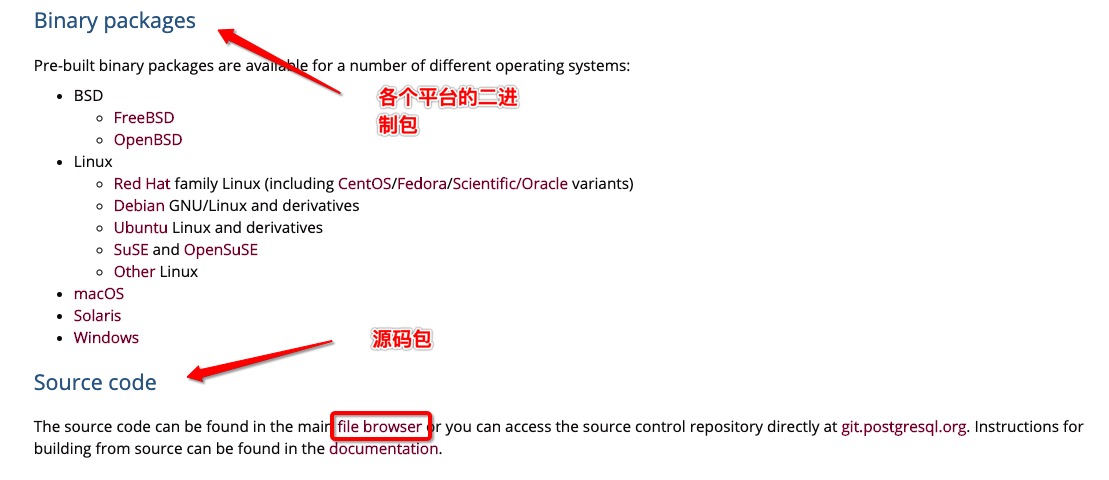
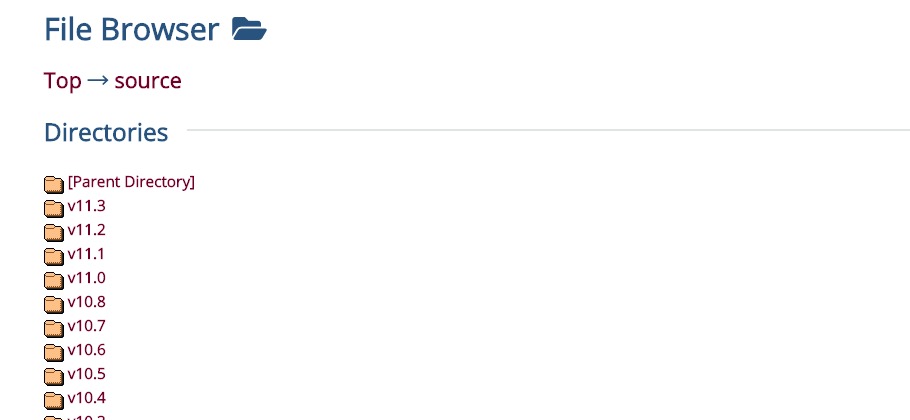
Click in the image above file browser We can also download the latest source code for PostgreSQL.
This chapter takes Ubuntu as an example. Ubuntu can install PostgreSQL using apt-get: After installation, the system creates a database superuser postgres with an empty password. At this point, use the following command to enter postgres and output the following information, indicating that the installation is successful: Exit the PostgreSQL prompt by entering the following command: The PostgreSQL installation is started by default, but the service can also be started manually in the following ways. 5.2.1. Ubuntu install PostgreSQL 
sudo apt-get update sudo apt-get install postgresql postgresql-client
# sudo -i -u postgres ~$ psql psql (9.5.17) Type "help" for help. postgres=#
\q sudo /etc/init.d/postgresql start # 开启 sudo /etc/init.d/postgresql stop # 关闭 sudo /etc/init.d/postgresql restart # 重启